 English
  French
  Spanish
  German


✓ News to remember
- Most of the side effects of a dental splint (sensitivity, slurred speech, hypersalivation) disappear within 1 to 2 weeks.
- Without rigorous hygiene and regular follow-up by an orthodontist, the risk of caries and gingival recession increases by 30 % in aligners.
- The recommended wearing time for orthodontic aligners is 20 to 22 hours a day for optimum treatment effectiveness.
- Bleaching trays containing hydrogen peroxide (10 to 20 %) increase tooth sensitivity in 50 % of users.
- Regular orthodontic follow-up (every 6 to 8 weeks) is the key to detecting early complications and adapting treatment.
Are the side effects of dental splints normal?
You've just started treatment with a dental splint and you're experiencing some discomfort? Don't panic! It's very common and, in the vast majority of cases, completely benign. As with many orthodontic appliances, the body needs time to adapt. The good news is that most side effects disappear within a few days to a few weeks.
What really counts is knowing how to identify them, understand them, and above all know when they become a red flag. That's exactly what we're going to look at together in this article!
💡 To remember: Most of the side effects of a dental splint are temporary and disappear within the first 1-2 weeks. Regular check-ups with your orthodontist are the best protection against lasting complications.
What are the most common side effects?
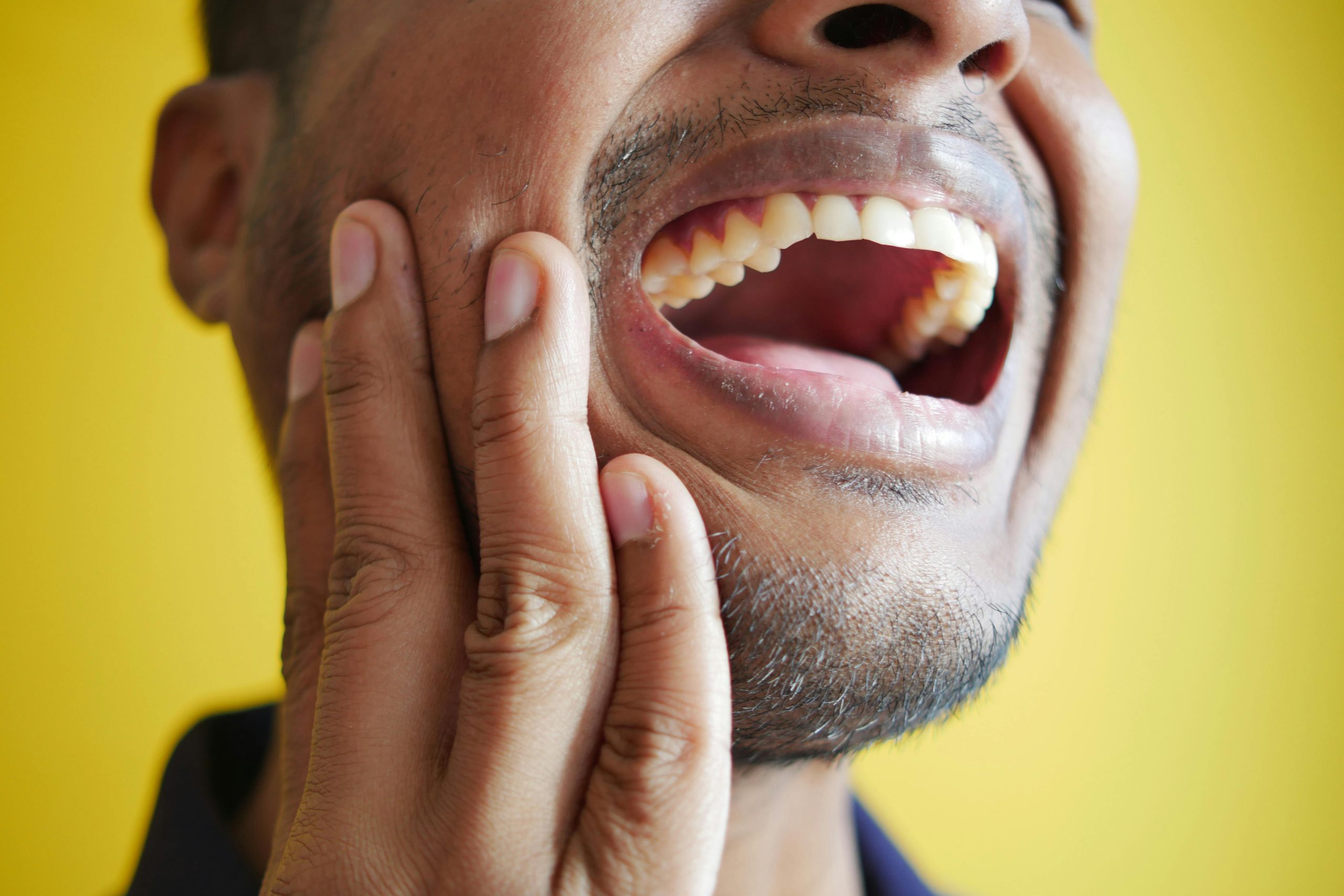
Dental trays - whether orthodontic, occlusal (anti-bruxism) or whitening - share fairly similar side effects to begin with. Here are the most common:
Tooth sensitivity
This is often the first feeling. Your teeth become more sensitive, especially to cold or heat. This is due to the pressure exerted by the aligner on the teeth to move them progressively. In general, this tooth sensitivity fades after 2 to 3 days following each mouthpiece change.
Speech disorders
Feel like you have a lisp or speak with a weird accent? It's perfectly normal! The splint temporarily alters the position of your tongue. Most patients return to normal speech within a week. Nothing too serious, I promise!
Hypersalivation
The body detects the gutter as a foreign object and produces more saliva to get rid of it. This natural reflex quickly subsides, usually within 3 to 5 days. Some patients experience the opposite effect - a dry mouth - especially if they tend to breathe through the mouth at night.
Gum and cheek irritation
The edges of the tray may rub against the soft tissues of the mouth. A little gingival or jugal irritation is common at the start of treatment. If it persists for more than 10 days, your orthodontist will have to adjust it!
Headaches and jaw pain
Some people experience headaches or muscular tension in the jawbone, especially with occlusal splints worn at night for bruxism. These pains are linked to the repositioning of the temporomandibular joint (TMJ). They generally disappear within a few days.
The risks of misuse
This is where we move into another category: undesirable effects that appear not because of the mouthpiece itself, but because of incorrect use or lack of follow-up. And it's a real shame about those, because they're avoidable!
Plaque build-up and cavities
Wearing a mouthpiece creates a warm, moist environment, ideal for bacterial proliferation. If oral hygiene is not impeccable, the dental plaque quickly accumulates under the aligner, considerably increasing the risk of caries. According to some clinical studies, patients wearing aligners are at greater risk of tooth demineralization in the event of insufficient hygiene.
Bad breath (halitosis)
A poorly maintained gutter becomes a veritable breeding ground for bacteria. The result? Bad breath... Halitosis is one of the most common side effects reported by patients who neglect daily cleaning of their braces. And yet it's so easy to avoid!
Gingival recession
An ill-fitting or inappropriately worn aligner can exert abnormal pressure on the gums. Over the long term, this can lead to gingival recession, i.e. a gradual receding of the gums that exposes the roots of the teeth. A real problem requiring serious orthodontic follow-up.
TMJ disorders
Without medical supervision, an incorrectly positioned occlusal splint for bruxism can aggravate temporomandibular joint (TMJ) disorders rather than alleviate them. That's why a custom-made mouthpiece, made by a healthcare professional, is always preferable to generic models sold in pharmacies.
✅ To remember: Dental aligners without professional supervision can lead to serious complications: cavities, gum recession, TMJ disorders. The device is only effective if properly fitted and accompanied by rigorous hygiene.
What are the contraindications to dental splints?

Dental splints are not suitable for everyone. Some situations require a thorough medical assessment before treatment is started.
- Allergy to materials Some people are allergic to the thermoplastic resins or polymers used in the manufacture of eavestroughs (particularly PEEK or polyurethane eavestroughs).
- Severe periodontitis In advanced periodontal disease, teeth and bones are weakened. Applying orthodontic pressure can worsen the situation.
- Unextracted wisdom teeth They can compromise the efficacy of treatment and generate additional pain.
- Untreated TMJ problems Occlusal splints: temporomandibular joint pathology must be treated before wearing an occlusal splint.
- Children with mixed dentition Orthodontic aligners are generally not suitable for children whose permanent dentition is not complete.
By the way, if you're considering a a complete solution such as a dental implant combined with follow-up care for your overall health, It's crucial to discuss compatibility with a future mouthpiece with your dentist.
How can you minimize side effects?
The good news is that most of the undesirable effects of a mouthpiece can be managed with a few good habits. Here are the tips that really make a difference!
Daily gutter cleaning, without exception
Cleaning your dental trays is non-negotiable. You need to rinse your mouth tray with cold water (never hot, it deforms it!) every time you remove it. Gentle brushing with a soft brush and unscented liquid soap is all you need. Specific effervescent tablets for aligners also exist - they're super effective at eliminating bacteria deep down.
Impeccable oral hygiene
Brush your teeth after every meal before putting your mouthpiece back in. And floss becomes your best ally! For treatment with Invisalign aligners, orthodontists recommend brushing at least 2-3 times a day, combined with antibacterial mouthwash.
Regular orthodontic follow-up
This is the key to successful treatment. Regular appointments with your orthodontist (usually every 6 to 8 weeks for aligner treatments) allow you to adjust the aligners, detect early complications and adapt the treatment plan if necessary.
Managing pain intelligently
For mild pain, a Level 1 analgesic such as paracetamol may suffice. Cold (ice cubes wrapped in a cloth) also helps to calm inflammation. If pain persists for more than 5 days after a mouthpiece change, contact your practitioner! For your information, managing the side effects of medical devices is similar to managing other conditions: for example, understanding the side effects of the copper coil follows the same principle of patience and medical monitoring.
Comparative table of side effects according to mouthpiece type
| Gutter type | Common side effects | Estimated duration |
|---|---|---|
| Orthodontic (aligner) | Sensitivity, slurred speech, hypersalivation | 1 to 2 weeks |
| Occlusal (bruxism) | Headaches, jaw tension, sleep disturbance | A few days |
| Bleaching | Increased sensitivity, gingival irritation | During treatment |
| Sportive (protection) | Initial discomfort, mild hypersalivation | A few hours |
| Restraint (post-orthodontics) | Slight pressure, night-time discomfort | 1 week maximum |
A word from my coach about dental aligners

You know better than anyone if you've been following me for a while: whether it's to sculpt your figure or improve your smile, regularity and follow-up make all the difference. A dental splint is the same - it's an ultra-efficient tool, but requires a minimum of discipline and attention.
The side-effects of a mouthpiece may look scary on paper, but in reality, in the vast majority of cases, they're temporary and manageable. What counts is listening to your body, not skipping your orthodontist appointments, and keeping your dental hygiene up to scratch!
If you experience persistent pain, unusual discomfort or effects lasting more than 2 weeks, don't let it drag on - talk directly to your practitioner. Good follow-up really is the guarantee of an effective treatment with no unpleasant surprises. 👍
Moreover, just as certain drug treatments require careful monitoring (for example, Side effects of Neofitoroid which require regular observation), your dental aligners benefit from the same kind of proactive monitoring to ensure your well-being and the effectiveness of the treatment.
FAQ: your questions about the side effects of aligners
Can you drink with a mouthpiece?
Still water, yes! For everything else - coffee, tea, soft drinks, fruit juices, alcohol - it's best to remove your aligner. Sweet or colored liquids seep under the aligner, encourage cavities and can stain or deform the device. Coffee, for example, quickly stains clear aligners. 😬
How long should I wear my mouthpiece every day?
For orthodontic aligners, the recommended wearing distance is 20 to 22 hours a day. You can remove them to eat, drink (other than water) and brush your teeth. Anti-bruxism occlusal splints should only be worn at night. The less you respect these times, the less effective the treatment will be!
Do aligners damage teeth?
Not if they're properly manufactured and maintained. On the other hand, poor-quality aligners purchased without a doctor's prescription, or worn without monitoring, can actually cause damage: uncontrolled tooth movement, wear and tear, or bite problems. A custom-made mouthpiece made by a professional is always the best option!
Can you smoke with a mouthpiece?
Technically possible, but not recommended. Tobacco smoke quickly turns plastic aligners yellow and damages them. It also encourages the accumulation of bacteria and increases the risk of gingival inflammation. The best thing to do is remove your mouthpiece before smoking, and brush your teeth before putting it back in.
Why is the restraint phase so important after an aligner treatment?
Teeth have a memory! After orthodontic treatment with aligners, they tend to want to return to their original position. The retainer (sometimes combined with a PEEK bonded wire) maintains the result achieved. Without it, orthodontic relapse can occur in just a few months. It's a step not to be neglected!
How long does discomfort last when treatment starts?
The vast majority of side effects - pain, hypersalivation, slurred speech - disappear within a few weeks. First 7 to 14 days. Each time you change your mouthpiece, you may experience a short period of discomfort (2 to 3 days). This is a sign that treatment is progressing in the right direction!
Additional frequently asked questions about dental aligners
Can dental aligners cause mouth ulcers?
Yes, especially at the start of treatment. The orthodontic aligners or occlusal irritation, causing mouth ulcers in 15 to 20 % of patients. Adjustment by a orthodontist or the application of orthodontic wax reduces these risks. Ulcerations generally disappear within 3 to 5 days, with a slight rigorous hygiene and antiseptic mouthwashes.
Is there a risk of tooth decalcification with clear aligners?
Yes, if the’oral hygiene is neglected. Visit transparent aligners create an environment conducive to bacterial proliferation, increasing the risk of decalcification by 30 % without brushing after each meal. Use fluoride toothpaste and plaque developer tablets limits this phenomenon.
Can dental splints be used for bridgework or implants?
It depends on the type of dentures. Occlusal splints are compatible with implants if they are custom-made. Orthodontic aligners, on the other hand, need to be assessed by an orthodontic technician. dental surgeon, They exert pressure that can damage bridges. A 3D scanner is often required to adapt the treatment.
Do whitening trays aggravate tooth sensitivity?
Yes, temporarily. Visit whitening trays containing hydrogen peroxide (10 to 20 %) increase sensitivity in 50 % of users. This reaction lasts 24 to 48 hours after each session. Use a desensitizing gel or toothpaste containing potassium nitrate reduces this effect.
How can I tell if my mouthpiece is loose?
There are three warning signs: a excessive pressure on a tooth, frequent loosening, or pain in the mouth.’temporomandibular joint. An ill-fitting mouthpiece can displace teeth by 0.5 mm in 2 weeks. A check-up at the’orthodontist every 2 months to correct these defects before they have an impact on the treatment.


