English
  French
  Spanish
  German


What You Need to Know About Honey and Health
- Honey provides about 304 kcal per 100 g, compared to 387 kcal for white sugar.
- ANSES sets the limit at 100 grams of total sugars per day for a healthy adult.
- Its glycemic index ranges from 35 to 70 depending on the variety, compared to 65 for sugar.
- It is not recommended for children under 1 year of age due to the risk of infant botulism.
4 Verified Facts4 sourcesUpdated on September 23, 2026
Just another kind of sugar
Honey is still more than 80 % composed of sugars. Its natural origin does not change its caloric content.
An ally, not a cure
Its benefits are real but modest. It is not a substitute for medical treatment or follow-up care.
Honey shows 304 kcal per 100 g—a figure I mention right from the first line. Whether raw or pasteurized, honey is, above all else, a concentrated source of sugar. In my work, I often come across the idea that honey is unconditionally good for your health. The reality is more nuanced. It does offer real benefits. It also has limitations that few articles go into detail about.
What's really in a spoonful of honey?
One tablespoon of honey weighs about 21 grams. It brings you nearly 64 kcal and 17 grams sugars. Honey consists of 82 % carbohydrates, especially fructose (about 41 g per 100 g) and glucose (about 36 g per 100 g), according to the table Ciqual of the’ANSES. It also contains trace amounts of minerals and enzymes that are not found in white sugar.
That doesn't change the bottom line. Little by little, you're consuming sugar. The word "honey" makes it sound sweeter. But your body doesn't really distinguish between the two sources when it comes to digestion.
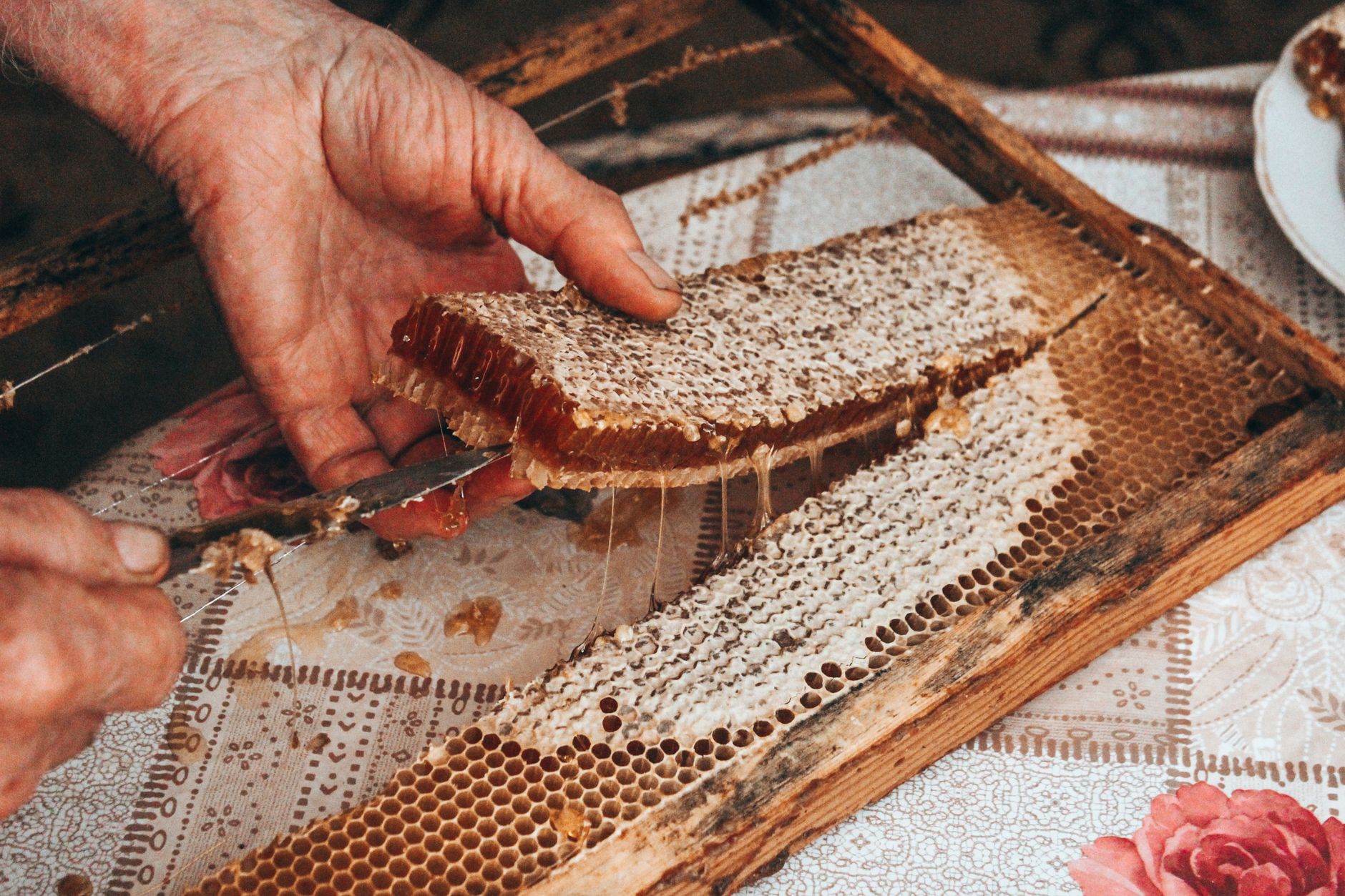
Which health benefits of honey have actually been proven?
Three uses are consistently cited in serious studies. Honey soothes a sore throat: several clinical trials have found that it has a soothing effect comparable to that of certain over-the-counter syrups. When applied to a small, superficial wound, it forms a film that helps prevent infection. Replace a piece of dark chocolate or one spoonful of honey instead of sugar also slightly reduces the calorie intake, thanks to its sweetening power, which is about 1.3 to 1.5 times that of sugar.
You don't need a whole jar to feel these effects. One spoonful is enough—not a whole bowl. At this dose, honey is good for your health without any special effort.
❌ Honey does not cure diabetes and is not a substitute for any treatment, despite its reputation as a healthier sugar.
Honey or Sugar: Which One Wins the Blood Sugar Test?
Its glycemic index ranges from 35 and 70 depending on the variety, compared to 65 for white sugar. Acacia honey causes only a slight rise in blood sugar. Chestnut honey raises blood sugar levels almost as much as sugar. The variety makes all the difference, as does the harvesting method: cold filtration and industrial heating do not yield the same final product. If you practice intermittent fasting, keep in mind that just a teaspoon of honey in your coffee is enough to raise your blood sugar—and thus, strictly speaking, to break your fast.
| Honey | White sugar | |
|---|---|---|
| Calories / 100 g | 304 kcal | 387 kcal |
| Glycemic Index | 35 to 70 | 65 |
| Total sugars / 100 g | 82 g | 100 g |
| Sweetening power | 1.3 to 1.5 times | Reference |
Keep this limit in mind before doubling the amount in your tea or yogurt.
📏 100 g total sugar per day, including honey: this is the guideline set by ANSES in 2012 for a healthy adult.
How much honey can you eat each day?
One teaspoon of honey (7 g) provides about 21 kcal. One tablespoon (21 g) comes to 64 kcal—that’s 17 g of sugar all by itself. It’s hard to stick to just one serving once the jar is sitting on the table... breakfast.
Here are some simple tips to help you stay in control:
- 1 teaspoon (7 g) = about 21 kcal and 6 g of sugar
- 1 tablespoon (21 g) = about 64 kcal and 17 g of sugar
- A single 250-gram jar alone exceeds the ANSES limit by more than two times if you finish it in one day
Add just one spoonful to your hot drink or your morning bowl. Not two. That’s the amount that keeps honey in the “treat” category—not the “sweet snack” one.
How do you choose good honey?
You can tell high-quality honey by its label as well as by its taste. Choose honey from a single source rather than a blend of EU and non-EU origins. Raw honey, not heated beyond 40 degrees, retains more enzymes than pasteurized versions.
I recommend tasting it before buying in large quantities: the differences in flavor between acacia, chestnut, and forest honey are distinct, and they also affect the glycemic index. The price is also a reliable indicator. Honey that’s too cheap often contains added sugar syrup—a form of fraud documented by several recent inspections. The same phenomenon affects other products considered natural, such as chicory, whose perceived health benefits sometimes exceed the actual evidence.
Who should be wary of honey?
Honey is not allowed before 1 year, without exception. The reason: the risk of infant botulism, as documented by ANSES in its opinion on 2010. The spores of the bacterium Clostridium botulinum They multiply in an infant’s immature intestine and produce a dangerous toxin there. Cooking does not eliminate this risk: cookies, pacifiers, and yogurt with honey should still be avoided before the age of 1.
People with pollen allergies should also be cautious: cross-reactions can occur, even if they are rare. For people with type 1 or type 2 diabetes, honey isn’t automatically a healthy alternative to sugar. Talk to your doctor if you’re unsure about the appropriate amount.
⚠️ Before the age of 1, no form of honey is safe: whether raw, cooked, in cookies, or on a pacifier, the risk of infant botulism remains real.
FAQ on Honey and Health
Does honey have any downsides as well?
Yes. It retains its status as a sugar in its own right, with a glycemic index that can reach as high as 70 depending on the variety, and a risk of infant botulism before the age of 1.
How much honey can you eat per day without exceeding the limit?
If you stay within the ANSES limit of 100 grams of total sugars per day, 2 to 3 tablespoons of honey already account for a significant portion of that allowance if it’s your only source of sugar.
Is honey recommended for gastritis?
There is no solid evidence to support this. It's better to see a doctor if the pain persists for more than a few days rather than relying on honey.
Is there a specific type of honey that helps lower cholesterol?
No. Based on the available data, no variety has been shown to affect cholesterol levels; replacing sugar with it has little impact on overall diet.
Is honey right for you? Take the quiz
Step 1 of 2
What's your situation?
No honey before age 1, in any form. The risk of infant botulism is real and has been documented by ANSES: it’s best to wait until your baby’s first birthday.
Honey has a variable glycemic index, just like any other sugar. Talk to your doctor before adding it to your diet, and stick to very occasional, small amounts.
You can enjoy it—up to one spoonful a day—as long as you count it toward your daily limit of 100 g of total sugars.